Choosing the right platform can make or break your print on demand business.
Pick the wrong setup, and you’ll struggle with traffic, margins, and customer experience.
Pick the right one, and everything becomes easier — from getting your first sale to scaling your store.
You get built-in traffic or better control over how you acquire it, healthier margins that actually leave room for profit, and a smoother customer experience that leads to repeat sales and word-of-mouth growth.
In this guide, we’ll break down the best print on demand platforms so you can choose the one that fits your goals.
If you’re still getting familiar with how everything fits together, start with the complete guide to print on demand to understand the full business model before choosing your platform.
What is a Print on Demand Platform?
A print on demand platform is the system (or combination of tools) that lets you turn your ideas into sellable products without holding inventory. It handles everything from product creation to delivery, so you can focus on design, marketing, and growing your brand.
With the right setup, you can:
- Create and list products (t-shirts, hoodies, mugs, posters, and more) using your own designs
- Sell them online through your own store or a marketplace
- Automatically fulfill orders, meaning products are printed, packed, and shipped to customers on demand
The key advantage? You don’t pay for stock upfront. Products are only created after a customer places an order, which keeps your risk low and your business lean.
There are two parts to this:
1. Store Platform (Frontend)
This is your storefront — where people discover your products, decide if they trust your brand, and choose whether to buy.
It’s where your positioning, design, and messaging come together to drive conversions.
Depending on the platform you choose, this can look very different:
- Marketplaces (like Etsy): You get built-in traffic, meaning people are already searching for products like yours. The trade-off is less control over branding and customer relationships.
- Custom stores (like Shopify or WooCommerce): You own the experience — from design to checkout — but you’re responsible for driving traffic through content, ads, or social media.
A strong store platform helps you:
- Showcase your products in a way that actually sells (clean layout, strong visuals, clear pricing)
- Build trust with customers (reviews, policies, branding, consistency)
- Optimize for conversions (fast loading, simple checkout, mobile-friendly design)
Think of it this way: your fulfillment provider handles the product, but your store platform is what turns visitors into paying customers.
2. Fulfillment Provider (Backend)
This is where your designs are turned into real products and automatically printed and shipped after each order.
When a customer buys from your store, the fulfillment provider automatically handles the entire process behind the scenes. This includes printing your design onto the product, packaging it professionally, and shipping it directly to your customer under your brand.
A good fulfillment provider doesn’t just “print and ship.” It directly impacts your product quality, delivery times, and overall customer experience — which means it can make or break your reputation.
Here’s what they typically handle:
- Printing your designs on demand (t-shirts, hoodies, mugs, posters, etc.)
- Sourcing and storing blank products (so you don’t hold inventory)
- Packaging orders (sometimes with custom branding like labels or inserts)
- Shipping and logistics (including tracking and delivery updates)
The key advantage is automation. Once everything is connected to your store, orders flow through without you needing to manually process anything.
However, not all fulfillment providers are equal. The one you choose affects:
- Profit margins (base product costs vary a lot)
- Shipping times (local vs international production)
- Print quality (which directly impacts refunds and reviews)
- Product range (some offer more unique or premium items)
Think of your fulfillment provider as your silent business partner — they handle the operations, while you focus on design, marketing, and growing your store.
Once your setup is ready, the next step is creating designs that people actually want to buy — not just designs that look good.
You need both to run a POD business.
The Best Print on Demand Platforms (Quick Comparison)
Here’s a quick breakdown:
| Platform | Best For | Difficulty | Traffic | Control |
|---|---|---|---|---|
| Etsy | Beginners | Easy | High | Low |
| Shopify | Branding | Medium | Low | High |
| Printify | Fulfillment | Easy | None | Medium |
| Printful | Fulfillment | Easy | None | High |
| Tapstitch | Streetwear | Easy | None | Medium |
Etsy (Best for Beginners)
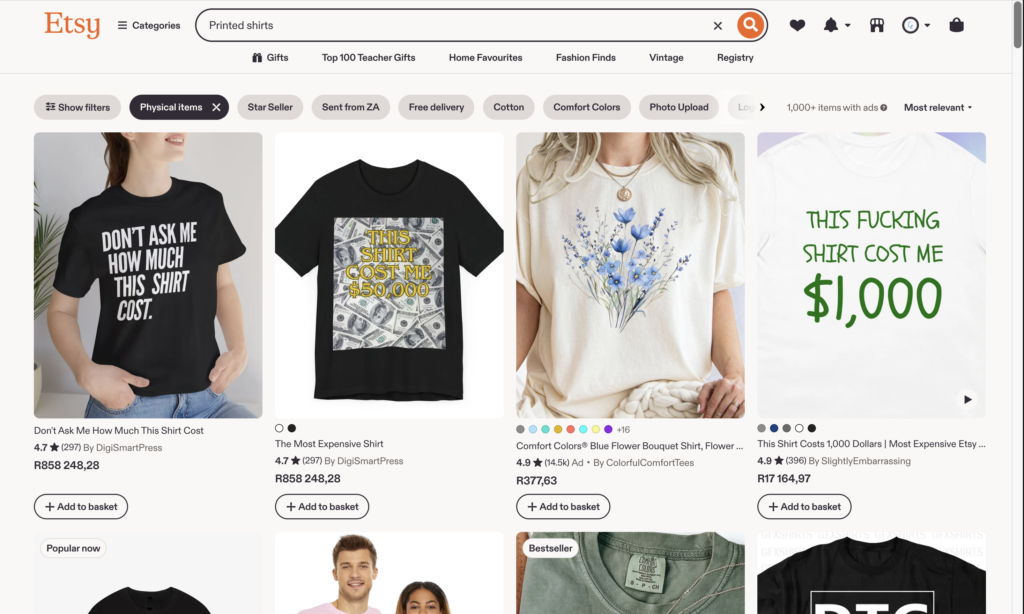
Etsy is one of the easiest ways to start selling print on demand products.
Why it works:
- Built-in traffic (people are already searching)
You’re tapping into an existing marketplace with millions of buyers actively looking for products. This means you don’t need to figure out ads, SEO, or content right away — Etsy does a lot of the discovery for you. - Fast validation (you can get sales quickly)
You can upload a design today and potentially get your first sale within days. This makes it one of the best platforms for testing niches, designs, and pricing without a big upfront investment. - Simple setup
No need to build a full website. You can create a store, connect a print-on-demand provider, and start selling in a few hours — even as a complete beginner. - Low upfront risk
There are no monthly fees to get started (just listing fees and transaction fees), which makes it ideal if you’re testing the waters before committing to a full business. - Search-driven growth
If your listings are optimized with the right keywords, Etsy can consistently bring in traffic over time, turning your products into passive sales channels.
Downsides:
- Fees cut into profits
Between listing fees, transaction fees, and payment processing fees, your margins can shrink quickly — especially on lower-priced items. - High competition
Popular niches are saturated, so standing out requires better designs, strong product mockups, and smart keyword targeting. - Limited control over branding
Your store sits within Etsy’s ecosystem, so customization is limited. It’s harder to build a distinct brand compared to owning your own website. - Platform dependency
You don’t own the traffic. Etsy controls visibility, and algorithm changes can impact your sales overnight. - Customer relationship limitations
You don’t fully own your customer data, which makes it harder to build an email list or long-term customer relationships.
Best for:
Testing ideas, validating products, and getting your first consistent sales without needing an audience or ad budget.
Shopify (Best for Building a Brand)
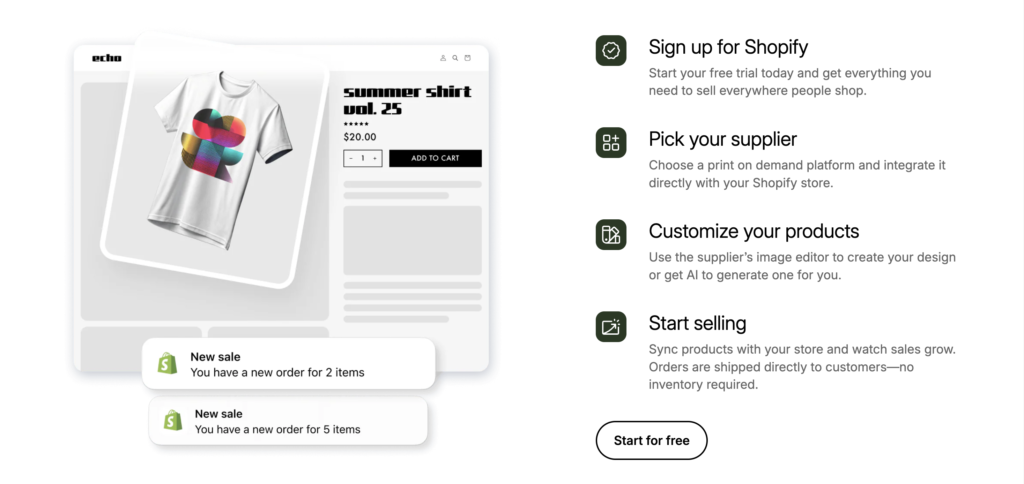
Shopify gives you full control over your store — from how it looks to how it converts visitors into customers. Unlike marketplaces, you’re not competing side-by-side with other sellers on the same page, which means every click is focused on your brand.
This is what turns a side hustle into something that actually grows over time.
Why it works:
- Full branding control (store design, messaging, customer experience)
- No marketplace competition on your product pages
- You own your customer data (emails, retargeting, lifetime value)
- Easier to build a recognisable brand, not just sell products
- Better long-term scalability as you add products and traffic sources
Downsides:
- No built-in traffic (you have to generate your own visitors)
- Requires marketing skills (ads, content, SEO, email)
- Monthly costs (Shopify plan, apps, tools)
- Slower start compared to marketplaces like Etsy
Best for:
Scaling, building a real brand, and creating a long-term asset you actually own
Printify (Best for Flexibility)
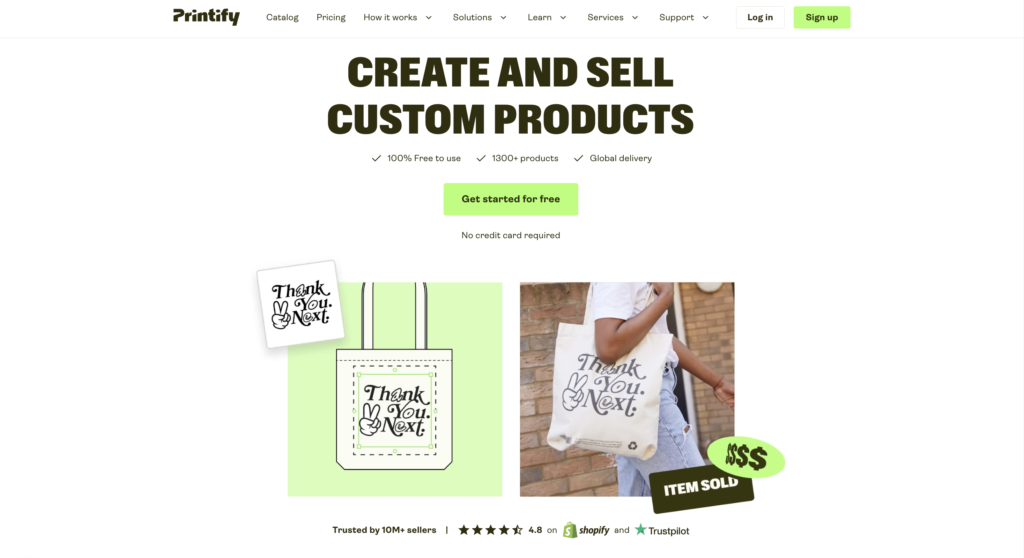
Printify connects you to a network of print providers around the world, letting you choose who fulfills each product based on price, location, and production speed. Instead of being locked into one supplier, you can compare options and optimise for profit, delivery times, or product quality depending on your strategy.
Why it works:
- Huge product catalogue (apparel, mugs, posters, home decor, and more)
- Multiple suppliers per product (you can test and switch based on performance)
- Competitive pricing → better margins if you choose the right providers
- Global fulfillment options (faster shipping to different regions)
- Easy integration with platforms like Etsy and Shopify
Downsides:
- Quality can vary between suppliers (you must order samples)
- Slightly more complex setup compared to single-provider platforms
- Shipping times and costs differ by supplier
- Managing multiple providers can get messy as you scale
Best for:
Cost optimisation, testing multiple suppliers, and scaling a product once you’ve validated demandg
You can learn more about Printify by reading this full review.
Printful (Best for Quality & Branding)
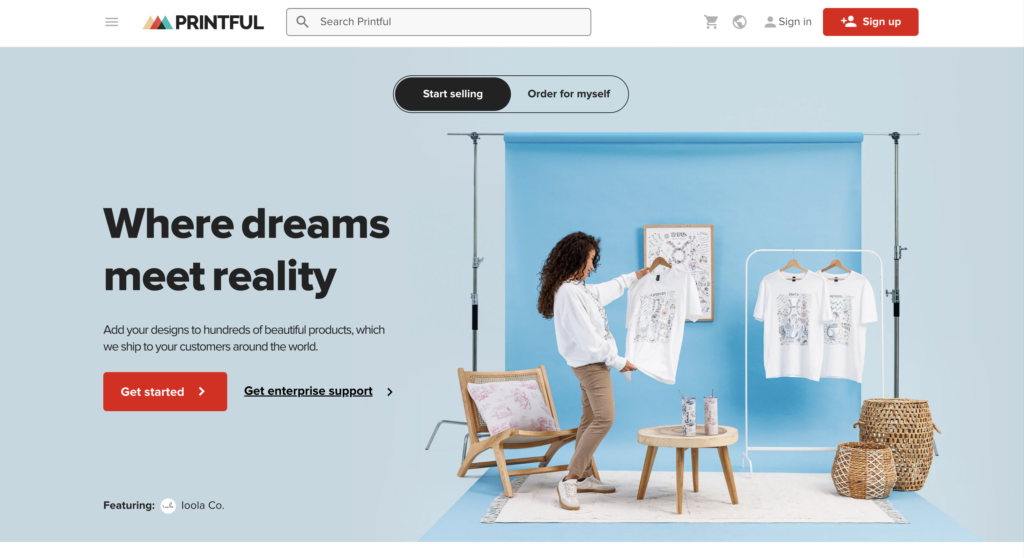
Printful focuses on delivering a premium customer experience — from the feel of the product to how it arrives at your customer’s door. If you care about building a brand people remember (not just making quick sales), this is where Printful stands out.
Why it works:
- High-quality products that feel premium (better materials, print consistency, and finish)
- Reliable fulfillment with consistent results — fewer surprises compared to multi-supplier platforms
- Built-in branding options like custom packing slips, labels, and packaging inserts
- Warehousing and fulfillment services if you want to scale beyond print-on-demand
- Strong integrations with Shopify and other platforms for a smooth workflow
Downsides:
- Higher product costs compared to platforms like Printify
- Lower profit margins unless you price your products strategically
- Less flexibility in choosing suppliers (you’re locked into Printful’s network)
- Can be harder to compete on price in saturated niches
Best for:
Premium brands that prioritise quality, customer experience, and long-term brand building over short-term margins
Tapstitch (Best for Streetwear & Fast Fulfillment)
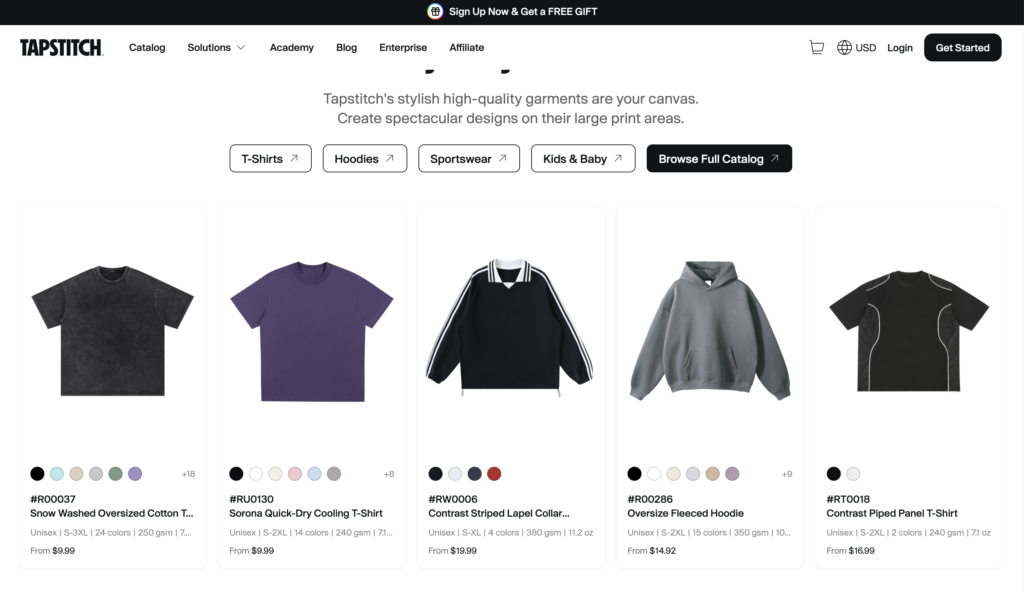
Tapstitch is a newer print on demand platform focused on fast production and streetwear-style products. If you’re building a brand that lives or dies by trends, speed matters — and that’s where Tapstitch stands out. Instead of waiting days (or weeks) for production, you can move quickly, test designs, and capitalise on trends while they’re still hot.
Why it works:
- Fast turnaround times (often within 48 hours), which is ideal for trend-based drops and limited releases
- Strong focus on modern, streetwear-style apparel (oversized tees, hoodies, and fashion-forward cuts)
- No minimum order quantities, making it easy to test designs without upfront risk
- Competitive pricing on clothing, giving you room to experiment with margins
- Great for “drop culture” — you can launch small batches, validate demand, then scale winning designs
- Simpler production flow compared to marketplaces with multiple suppliers (less decision fatigue)
Downsides:
- Smaller product range compared to bigger platforms like Printify or Printful
- Less brand recognition, which can impact perceived trust for first-time customers
- Fewer integrations and automation options compared to established ecosystems
- Limited supplier network, meaning less flexibility in sourcing variations
- Not ideal if you want a wide catalogue (e.g. home decor, accessories, etc.)
Best for:
👉 Streetwear brands and creators who want fast fulfillment, trend-driven products, and the ability to test and scale designs quickly without overcomplicating the processoducts
If you’re thinking about using Tapstitch, have a look this in-depth Tapstitch review.
How to Choose the Right Platform
Don’t overcomplicate this.
Most people get stuck here because they try to pick the “perfect” setup instead of just starting. You don’t need perfect—you need momentum.
Choose based on your goal:
If you want quick sales:
Start with Etsy + Printify
You’re tapping into an existing marketplace with built-in traffic. No need to worry about ads or branding early on—just focus on validating designs and getting your first sales as fast as possible.
If you want a brand:
Use Shopify + Printful
This gives you full control over your store, customer experience, and long-term growth. It’s slower at the start (because you need traffic), but it’s how you build something you actually own.
If you want both:
Start on Etsy → move to Shopify later
This is the smartest path for most people. Use Etsy to test what sells, then transition your winning products to Shopify where you keep more profit and build a real brand.
At the end of the day, your platform doesn’t make you money—your products and traffic do.
Pick one setup, launch quickly, and improve as you go.
Before choosing a platform, it’s worth making sure you’re targeting the right audience — here’s how to find profitable print on demand niches that actually sell.
Best Platform Combinations
Here’s how to think about each setup so you can actually make a confident decision instead of guessing:
This isn’t about picking the “best” platform. It’s about picking the one that matches your current goal, skill level, and how fast you want results.
If your goal is speed and validation, you want something that removes friction. If your goal is building a long-term asset, you need control. And if you want both, you need a phased approach.
Here are the most effective setups:
Beginner Setup: Etsy + Printify
This is the fastest way to get started and see real results.
Etsy already has traffic. People are actively searching for products, which means you can skip the hardest part (getting eyeballs) and focus on what actually sells.
Printify keeps your costs low and gives you a wide range of suppliers, which is perfect when you’re testing designs.
Best for:
- Beginners who want their first sale ASAP
- People with little to no budget
- Testing multiple niches and ideas quickly
Watch out for:
- Lower profit margins due to Etsy fees
- Less control over branding and customer experience
Balanced Setup: Shopify + Printify
This is where things start to shift from “side hustle” to actual business.
You now own the store, the data, and the customer experience. Printify still keeps your costs flexible, so you can maintain decent margins while testing.
But here’s the trade-off: no built-in traffic. You need a plan for getting visitors (TikTok, Instagram, ads, or SEO).
Best for:
- People ready to learn traffic and marketing
- Those who want better margins than Etsy
- Anyone thinking long-term but still testing
Watch out for:
- No sales without traffic
- Slightly more setup and learning curve
Premium Setup: Shopify + Printful
This is the quality-first, brand-focused route.
Printful is known for more consistent quality, branding options (like custom packaging), and smoother fulfilment. That matters when you’re trying to build a real brand people trust.
Your costs are higher, but so is your perceived value.
Best for:
- Building a premium brand
- Selling higher-ticket products
- Creating a strong customer experience
Watch out for:
- Higher product costs (so pricing strategy matters more)
- Still requires a solid traffic plan
So which one should you choose?
If you’re overthinking it, use this simple rule:
- No experience + want fast results → Etsy + Printify
- Some experience + willing to learn traffic → Shopify + Printify
- Serious about branding + long-term play → Shopify + Printful
You can’t skip stages. Most successful stores didn’t start as “brands”—they started by testing what people actually buy.
The smartest move for most people is: Start with Etsy → validate products → move winners to Shopify → improve branding and margins over time.
That way, you’re not guessing. You’re building on real data.
Pick one, launch quickly, and let the market tell you what works.
Once you start getting consistent sales, the next step is building systems that allow you to scale without doing everything manually.
Common Mistakes to Avoid
- Starting on Shopify with no traffic plan — Shopify doesn’t bring built-in traffic. If you launch without a clear plan (TikTok, Pinterest, SEO, or ads), your store will just sit there. Always decide how people will find you before you build.
- Choosing the cheapest supplier only — Lower cost often means lower quality, slower shipping, and unhappy customers. One bad experience can kill repeat purchases. Focus on reliability, print quality, and reviews first, then optimise costs later.
- Ignoring shipping times — Long delivery windows are one of the biggest reasons for refunds and negative reviews. Be upfront about timelines and, where possible, choose suppliers with faster local fulfilment.
- Not ordering samples — What you see in mockups isn’t always what you get. Ordering samples lets you check print quality, colours, packaging, and overall customer experience before selling.
- Trying to use too many platforms at once — Spreading yourself across Etsy, Shopify, TikTok Shop, and more too early leads to burnout and poor execution. Pick one platform, learn it properly, get traction, then expand.
- Not validating products before scaling — Launching dozens of designs without testing demand wastes time and money. Start small, see what sells, then double down on winners.
- Overcomplicating designs — Simple, clear, niche-specific designs often outperform complex ones. If the message isn’t instantly understood, it won’t convert.
- Poor product descriptions — A good design alone isn’t enough. Your title and description should clearly explain who it’s for, why it matters, and why someone should buy now.
- Ignoring niche targeting — “Everyone” is not a target market. The more specific your niche (e.g. dog moms, gym beginners, teachers), the easier it is to create designs that actually sell.
- Giving up too early — Most stores don’t succeed in the first few weeks. The ones that win test consistently, learn from data, and improve over time.once
Final Thoughts
There’s no “perfect” platform.
There’s only the platform that fits your current stage, your budget, and how fast you’re willing to move.
At the beginning, simplicity wins. You don’t need the best tools, the biggest store, or the most polished brand. You need something live, something real, and something that can make you your first sale.
Start simple.
Launch fast, even if it’s not perfect.
Get your first sales and pay attention to what actually works—your designs, your pricing, your traffic sources.
That’s where the real insights come from.
Then optimise.
Improve your listings, refine your niche, test better designs, and double down on what’s already converting.
And only then do you scale—more products, more traffic, better systems.
Most people fail because they try to scale before they’ve proven anything.
The ones who win focus on momentum first… and perfection later.
🚀 Next Steps
If you’re just starting:
👉 Pick ONE platform
👉 Launch 5–10 products
👉 Focus on getting traffic
Getting traffic is what makes your store work — especially if you’re using Shopify — so it’s important to understand how to market your products effectively.