PLR Content Guide
Ever felt the friction of wanting to build something online—an ebook, a template, a mini-course—but getting stuck before you even begin?
Not because you lack ideas, but because the sheer effort of starting from zero feels overwhelming.
This is the hidden bottleneck most creators face. Not creativity. Not ambition. But starting cost.
That’s where PLR (Private Label Rights) quietly changes the game.
PLR isn’t a hack. It’s not a loophole. And it’s definitely not a shortcut for people trying to avoid doing real work.
It’s leverage.
Instead of building from scratch, you begin with something that already exists—then reshape it, repackage it, and reposition it into something that feels entirely your own.
If you approach it correctly, PLR allows you to move faster, test ideas with less risk, and build digital products without burning out in the process.
In this PLR content guide, we’re going deep. Not just what PLR is, but how to actually use it in a way that produces real outcomes—products that sell, content that ranks, and systems that scale.
Explore more on PLR content
- Where to find PLR content
- How to sell PLR products
- Best PLR products to sell
- How to rebrand PLR products
- Different PLR models

What we’ll cover
What is PLR (Private Label Rights)?
PLR stands for Private Label Rights. At its core, it’s content that you can purchase and then modify, brand, and distribute as your own.
That content might come in many forms: articles, ebooks, courses, templates, email sequences, or even full product bundles.
What makes PLR powerful isn’t just that you can use it. It’s how much control you’re given over it.
In most cases, PLR licenses allow you to edit the content, change the title, adjust the structure, add or remove sections, and publish it under your own brand. Some licenses even allow you to resell the content as a product.
This level of flexibility turns PLR into something far more interesting than just pre-written material. It becomes raw material.

A better way to think about it is this: PLR is not the final product—it’s the starting point.
And that distinction is where most people either win or lose.
Because if you treat PLR as something to upload and publish immediately, you’ll end up with generic content that blends into the noise.
But if you treat it as a foundation—something to build on, reshape, and enhance—you can create assets that feel original, valuable, and worth paying for.
This is the foundation of any effective PLR content guide—understanding that PLR is a starting point, not the final product.
PLR vs MRR vs RR: Understanding the Differences
Before going further, it’s important to clear up a common point of confusion.
Not all resellable content is created equal.
PLR is just one type of licensing model. You’ll also come across MRR (Master Resell Rights) and RR (Resell Rights), and each one gives you a different level of control.
With PLR, you typically have the most flexibility. You can edit, rebrand, and transform the content however you like. That’s why it’s so valuable for creators who want to build something unique.
MRR, on the other hand, usually allows you to sell the product as-is. You can profit from it, but you’re not supposed to modify the core content. That limits your ability to differentiate.
RR is even more restrictive. You can resell the product, but often without passing on resale rights to your customers, and usually without making significant changes.

If your goal is to build a brand, create original-feeling products, and stand out in crowded markets, PLR is the clear winner.
It gives you creative control, which ultimately translates into market advantage.
If you have some content you’re thinking of editing, tools like Canva and Kittl make it easy to do.
Why PLR Works (When Used Properly)
PLR works because it removes one of the biggest barriers in digital creation: time.
Creating a high-quality product from scratch can take days or weeks. Writing, structuring, editing, designing—it all adds up.
PLR compresses that timeline.
Instead of starting with a blank page, you start with something that already has structure. Ideas are outlined. Sections are drafted. The heavy lifting is partially done.
This doesn’t eliminate the work. It redirects it.
Instead of spending your time creating raw content, you spend your time improving, refining, and positioning it.
This is exactly why a structured PLR content guide can help you move faster without sacrificing quality.
And that’s a far more strategic use of your effort.
There’s also a second advantage that’s often overlooked: speed of testing.
When you can create products faster, you can test ideas faster. You can validate niches, experiment with offers, and see what resonates without committing weeks to a single concept.
That feedback loop is where growth happens.
But this only works if you resist the temptation to treat PLR as a finished product.
Because the moment you skip the transformation step, you lose the advantage.
The Right Way to Use PLR (A Practical PLR Content Guide Framework)
Using PLR effectively isn’t about downloading content and publishing it. It’s about following a process that turns generic material into something specific, useful, and differentiated.
This PLR content guide framework gives you a repeatable way to turn generic content into something valuable.
The first step is choosing a clear niche.
PLR works best when it’s targeted. The more specific your audience, the easier it is to reshape the content into something that feels tailored rather than generic.
Once you have your niche, you select PLR that aligns with it. Not everything you find will be usable, and that’s fine. Think in terms of potential, not perfection.
Learn which products work well within your niche with this guide.
Then comes the most important step: transformation.
This is where you rewrite key sections, adjust the structure, and inject your own perspective.
You don’t need to rewrite everything from scratch. In fact, that defeats the purpose. But you do need to change enough that the final output feels intentional.
Add examples. Expand weak sections. Remove anything that feels outdated or irrelevant.
Finally, you package it.
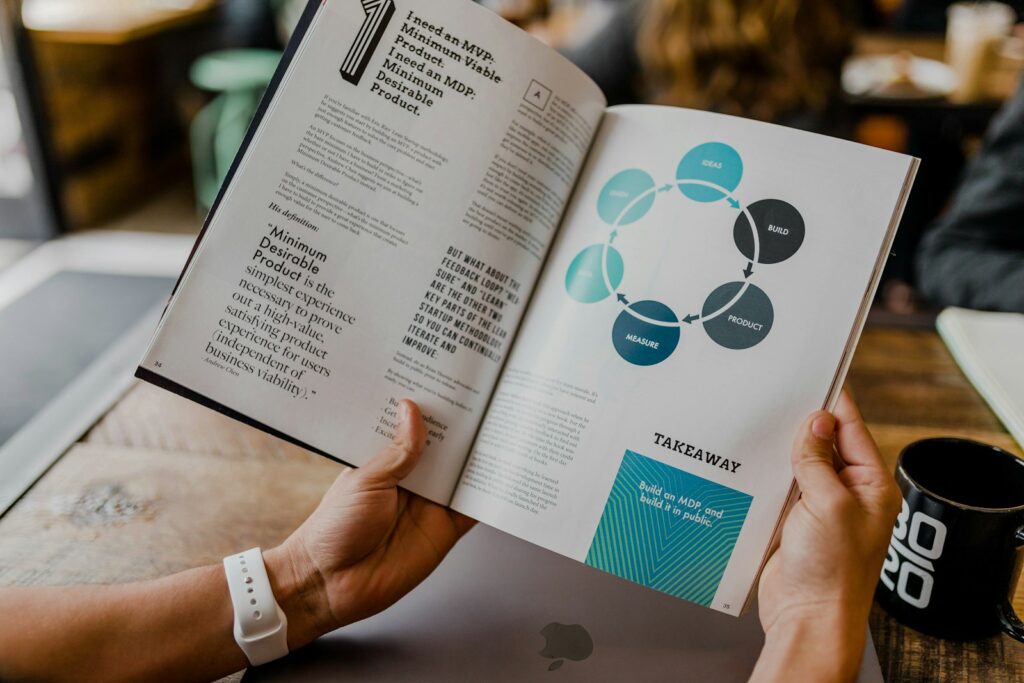
And this is where many people underestimate the importance of presentation.
A well-designed PDF, a clean layout, a strong title—these elements dramatically influence how your product is perceived.
Two creators can start with the same PLR content and end up with completely different outcomes, simply based on how they package and position it.
If you’re looking for where to find the best PLR products, you can start here.
Turning PLR into Digital Products That Actually Sell
One of the biggest misconceptions about PLR is that it’s limited to ebooks.
In reality, it’s far more flexible than that.
PLR content can be broken down, expanded, combined, and repurposed into a wide range of digital products.
An ebook can become a series of short guides. A long article can become a checklist, a template, or a swipe file. A bundle of content can be reorganized into a mini-course.
The key is to think in terms of outcomes rather than formats.
What problem does this content help solve?
Once you understand that, you can choose the format that delivers the solution most effectively.
For example, if the content is about social media growth, you might turn it into a content calendar or a set of prompts. If it’s about productivity, you might create a Notion template or a printable planner.
This shift—from content to outcome—is what transforms PLR from something passive into something valuable.
Because people don’t buy content. They buy results.
Following a clear PLR content guide makes it much easier to turn raw content into products people actually want to buy.
Rebranding PLR: From Generic to Premium
Rebranding is where PLR either becomes forgettable or becomes valuable.
At a surface level, rebranding might look like changing the title or adjusting a few sections. But real rebranding goes deeper.
It’s about aligning the content with your voice, your audience, and your positioning.
Start with tone.
If the original content feels formal or generic, rewrite sections so they match how you naturally communicate. This alone can make a significant difference.
Then look at structure.
Can the content be reorganized to flow better? Can sections be combined or expanded? Small structural changes can improve clarity and usability.
Next is design.
Visual presentation plays a huge role in perceived value. Clean typography, consistent spacing, and thoughtful layout can turn basic content into something that feels premium.
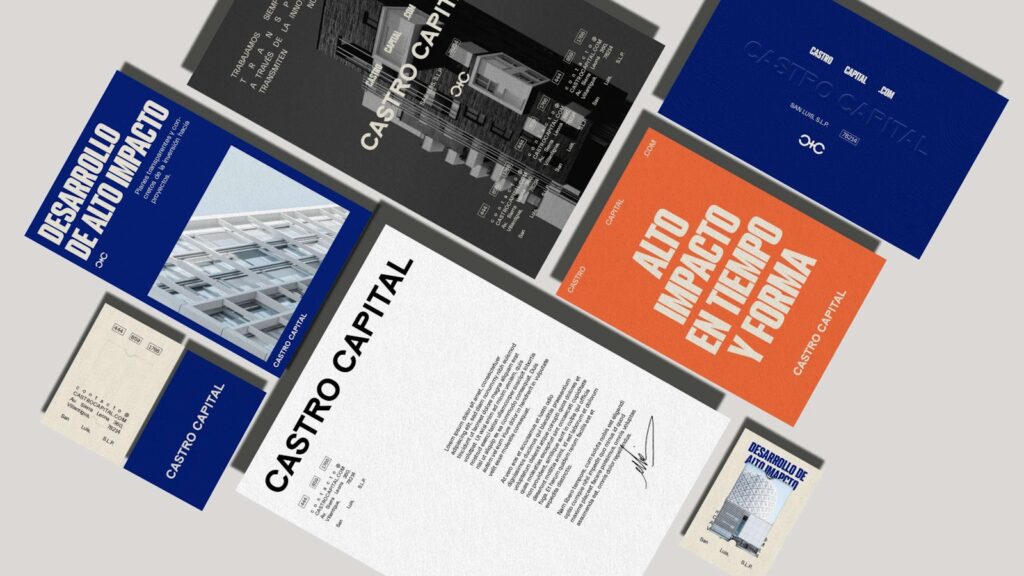
Finally, add something that didn’t exist before.
This could be examples, case studies, templates, or even personal insights. These additions create differentiation.
And differentiation is what allows you to price and position your product with confidence.
See the full rebranding guide here.
Where to Sell PLR-Based Products
Once your product is ready, distribution becomes the next focus.
There’s no single best platform. The right choice depends on your audience and your strategy.
Marketplaces like Etsy are great for visibility. They bring built-in traffic, which can help you validate ideas quickly.
Platforms like Gumroad or Payhip offer more control. You can build a storefront, manage pricing, and keep a larger share of your revenue.
Your own website gives you the most flexibility. It allows you to build an ecosystem—content, products, email capture—all working together.
The key is not to overcomplicate this stage.
Pick one platform, launch, and gather feedback.
You can always expand later.
Common PLR Mistakes (And How to Avoid Them)
Most failures with PLR come down to a handful of predictable mistakes.
The first is using content without editing it.
This is the fastest way to produce something that feels generic and forgettable.
The second is choosing overly saturated topics.
If everyone is selling the same type of product, differentiation becomes harder. That doesn’t mean you should avoid popular niches entirely, but you should look for angles that are more specific.
The third mistake is ignoring presentation.
Even strong content can underperform if it’s poorly packaged. Design, formatting, and clarity all influence how your product is perceived.
Finally, there’s the mistake of not adding value.
PLR gives you a foundation, but it’s your additions that create uniqueness. Without that layer, you’re competing on price instead of quality.
Is PLR Worth It?
PLR is absolutely worth it—but only if you approach it with the right mindset.
If you’re looking for something you can upload and sell instantly without effort, you’ll be disappointed.
But if you see it as a way to move faster, test ideas, and build products more efficiently, it becomes incredibly powerful.
It allows you to focus on leverage rather than labor.
And in a landscape where speed and iteration matter, that’s a significant advantage.
Final Thoughts
PLR is not about cutting corners.
It’s about removing friction.
It gives you a starting point, but what you build from that starting point is entirely up to you.
If you use it strategically, you can create products faster, validate ideas with less risk, and build a system that compounds over time.
And ultimately, that’s the goal—not just to create content, but to create assets that work for you.
If you follow this PLR content guide, you’re not just creating content—you’re building scalable digital assets.
FAQ
What a the PLR content guide?
A PLR content guide is a structured approach to using Private Label Rights content to create, customise, and sell digital products. Instead of treating PLR as finished content, a PLR content guide shows you how to transform it into something unique, valuable, and aligned with your brand.
How do you use PLR content effectively?
To use PLR content effectively, you need to go beyond simply publishing it. A proper PLR content guide involves rewriting key sections, improving structure, adding your own insights, and repackaging the content into a format that solves a specific problem for your audience.
Can you make money with PLR content?
Yes, you can make money with PLR content if you follow a clear strategy. A strong PLR content guide focuses on transforming content into digital products, positioning them correctly, and selling them through platforms like your website, marketplaces, or email funnels.
Is PLR content good for SEO?
PLR content can be good for SEO, but only if it’s properly rewritten and optimised. A well-executed PLR content guide ensures the content is unique, keyword-optimised, and valuable enough to rank in search engines without being flagged as duplicate content.
What are the best PLR products to sell?
The best PLR products to sell are those that deliver a clear outcome. Following a PLR content guide, you can turn PLR into ebooks, templates, planners, mini-courses, or toolkits that solve specific problems in a niche market.
What is the difference between PLR, MRR, and RR?
PLR gives you the most flexibility, allowing you to edit and rebrand content. MRR lets you resell the product but not modify it, while RR allows resale with more restrictions. A good PLR content guide focuses on PLR because it gives you full creative control.
Do you need to rewrite PLR content?
Yes, rewriting is essential. Any effective PLR content guide emphasises transformation—editing, restructuring, and enhancing the content so it becomes unique and valuable rather than generic.
How do you turn PLR into a digital product?
To turn PLR into a digital product, you refine the content, choose a format (ebook, template, course), improve the design, and package it around a clear outcome. A structured PLR content guide helps you follow this process step by step.
Where can you sell PLR products?
You can sell PLR-based products on platforms like Etsy, Gumroad, Payhip, or your own website. A strong PLR content guide recommends starting with one platform, validating demand, and then expanding distribution.
Is PLR worth it for beginners?
PLR is worth it for beginners because it reduces the time and effort required to create content from scratch. With the right PLR content guide, beginners can launch products faster and start learning what works without a huge upfront investment.