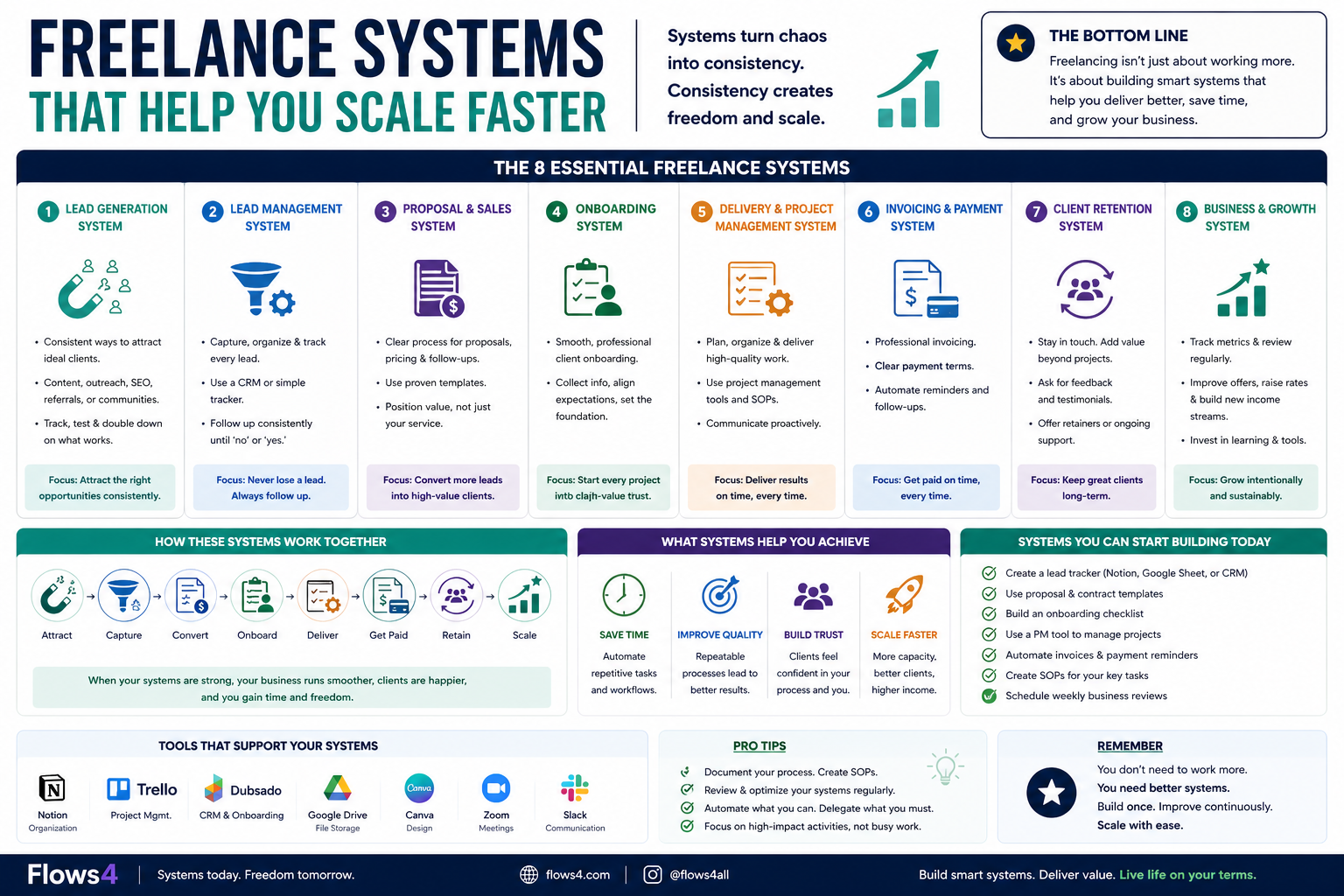
Most creators struggle with consistency.
They start motivated, publish a few pieces of content, then burn out or run out of ideas. Weeks go by without posting, momentum disappears, and the cycle repeats.
The problem usually isn’t creativity.
It’s the lack of a system.
Successful creators don’t rely on motivation or inspiration. They build workflows that make content creation predictable and repeatable.
A content creation workflow turns scattered ideas into a structured process that helps you consistently produce and publish content without burning out.
In this guide, you’ll learn how to build a complete content creation workflow that works whether you’re a freelancer, YouTuber, writer, or digital creator.

What Is a Content Creation Workflow?
A content creation workflow is a structured system that organizes how content moves from idea to publication.
Instead of randomly creating content whenever inspiration strikes, a workflow breaks the process into stages.
A typical workflow includes:
- idea generation
- planning
- production
- distribution
- optimization
Each stage has its own tools, processes, and systems.
When these steps are organized into a workflow, creators avoid common problems like creative blocks, inconsistent posting, and content burnout.
Why Creators Need a Workflow
Many creators approach content like a hobby rather than a process.
That works at the beginning, but it becomes a problem when you try to grow an audience or build a business.
A workflow provides several advantages.
Consistency
A system ensures content gets produced regularly instead of sporadically. Instead of relying on bursts of motivation, creators follow a predictable process that keeps content moving from idea to publication. This consistency builds audience trust, improves platform algorithms’ perception of your content, and compounds results over time. When content is published regularly, creators also gain more data about what works, making it easier to refine topics, formats, and distribution strategies.
Efficiency
Workflows remove decision fatigue and eliminate the constant question of “What should I work on next?” Instead of starting from scratch every time you sit down to create, a defined process tells you exactly where you are in the pipeline—whether that’s capturing ideas, outlining, producing, editing, or publishing.
This clarity dramatically reduces the mental load of content creation. Creators no longer waste time switching between tasks, rethinking their process, or reinventing how they work each week. Instead, they can focus their energy on the most important part: producing high-quality content.
Over time, this efficiency compounds. What once took hours becomes a repeatable process that can be executed faster, more consistently, and with far less friction.
Scalability
Once a system works, it becomes a powerful asset for creators. Instead of producing content one piece at a time, the same workflow can support publishing across multiple platforms such as blogs, newsletters, YouTube, and social media.
This scalability allows creators to increase their content output without dramatically increasing the time they spend creating. A single idea can move through the workflow and become a long-form article, a short social post, a video script, a carousel, or an email newsletter.
Over time, the workflow becomes a content engine. Ideas move smoothly from capture to publication, and creators can consistently produce more content while maintaining quality and focus.
This is how many successful creators expand their reach. They don’t simply work harder — they build systems that allow their content to scale.
Reduced Burnout
Creators who rely on inspiration eventually burn out. Inspiration is unpredictable, and when it becomes the primary driver of your work, content production becomes inconsistent and stressful.
Systems create sustainable momentum. When creators build structured processes for capturing ideas, producing content, and publishing regularly, they remove the pressure to constantly feel motivated.
Instead of asking “Do I feel inspired today?”, the question becomes “What step in the workflow am I on?”
This shift dramatically reduces creative fatigue. Content creation stops feeling like an emotional rollercoaster and starts functioning more like a reliable production system.
Over time, this consistency compounds. Creators who rely on systems publish more often, build stronger audience trust, and generate far more opportunities than those who only create when inspiration strikes.
The 5-Stage Content Creation Workflow
A strong creator workflow usually follows five stages.
These stages turn a simple idea into published content.
1. Idea Capture
Ideas appear everywhere — during conversations, while scrolling social media, or while solving problems for clients.
The problem is that most creators lose their ideas because they don’t capture them.
An idea capture system allows you to store ideas quickly before they disappear.
Common idea capture systems include simple tools and structures that make it easy to store ideas the moment they appear. The goal is speed and accessibility — capturing ideas before they disappear.
Some popular idea capture systems include:
- Idea banks: A centralized list of potential content topics that you continuously add to. This could live in a spreadsheet, Notion database, or notes app. Over time, an idea bank becomes a powerful content reservoir you can pull from whenever you’re ready to create.
- Swipe files: A collection of interesting content you discover online. Creators often save headlines, hooks, tweet formats, YouTube titles, or social media posts that performed well. Swipe files aren’t for copying — they’re for studying patterns that make content engaging.
- Content prompts: Structured prompts designed to spark ideas quickly. For example: “3 mistakes beginners make with [topic]” or “The tool that changed how I do [task].” Prompts reduce the friction of brainstorming and help you generate multiple ideas quickly.
- Note-taking apps: Tools like Apple Notes, Notion, or Google Keep allow you to capture ideas instantly from your phone or computer. The best capture system is one that works wherever inspiration strikes — whether you’re at your desk or walking outside.
Many experienced creators also combine these systems into a single workflow. For example, they may capture raw ideas in their phone, move promising ideas into a structured idea bank, and store interesting content examples in a swipe file for inspiration.
Over time, this process creates a constantly growing library of content ideas. Instead of struggling to think of something new every time you sit down to create, you simply open your idea bank and choose the next topic in your queue.
Have a look at how to create a content capture system in this useful guide.
2. Content Planning
Once ideas are captured, the next step is planning.
Planning turns raw ideas into a structured publishing schedule.
Many creators use a content calendar to organize their output.
Content planning typically includes several strategic steps that help creators move from scattered ideas to a clear publishing roadmap.
Instead of deciding what to create each day, planning allows creators to organize content in advance so production becomes far easier and more predictable.
Effective content planning usually involves:
- Selecting weekly or monthly topics. Creators often review their idea bank and choose topics that align with their niche, audience interests, and current goals. This ensures each piece of content contributes to a larger strategy rather than existing as an isolated post.
- Organizing publishing dates. Assigning content to specific dates creates accountability and prevents long gaps between posts. Many creators use simple content calendars or scheduling tools to map out when content will be published.
- Deciding which platforms to prioritize. Different platforms reward different types of content. During the planning stage, creators decide whether a piece of content is best suited for a blog article, YouTube video, newsletter, social post, or multiple platforms.
- Grouping content into themes or series. Organizing content around themes makes it easier to stay focused and build authority around specific topics. For example, a creator might dedicate a week to productivity systems, AI tools, or content strategy.
- Aligning content with larger goals. Strong planning also connects content with long-term outcomes such as growing an email list, attracting freelance clients, promoting a product, or building topical authority for SEO.
When creators take time to plan their content, the creation process becomes far less stressful. Instead of asking “What should I post today?”, they simply follow the roadmap they’ve already created.
Have a look at how to get started with a content calendar in this useful guide.
3. Content Production
Production is where the actual content gets created.
This stage often takes the most time, which is why efficient creators use batching systems.
Batching means creating multiple pieces of content during the same session.

For example, a creator might dedicate a focused session to producing several pieces of content at once. This could mean outlining and drafting multiple blog posts in a single writing session, recording several videos while the camera setup is already in place, or designing a week’s worth of social media graphics in one sitting.
By grouping similar tasks together, creators reduce the time lost switching between different types of work. Instead of constantly setting up equipment, opening different tools, or shifting mental focus, they stay in the same creative mode for longer periods.
Over time, this approach can significantly increase output while also making the content creation process feel more structured and manageable. Many full-time creators rely on batching because it allows them to maintain consistent publishing schedules without feeling overwhelmed.
Get started with content batching in this useful guide.
4. Content Distribution
Publishing content is only half the job.
Distribution determines whether your content actually reaches people.
Many creators make the mistake of publishing once and hoping the algorithm does the rest.
Instead, strong workflows include structured distribution systems such as scheduling tools, repurposing frameworks, and multi-platform publishing strategies that ensure content continues working long after it is first published. Rather than relying on algorithms to randomly surface your work, creators intentionally design systems that repeatedly place their content in front of the right audience.

This might include scheduling posts in advance, republishing evergreen content at strategic intervals, or adapting one piece of content into multiple formats. By planning distribution ahead of time, creators turn a single piece of work into an ongoing stream of visibility.
For example, one YouTube video can become:
- several short-form social media clips
- a detailed blog post expanding on the topic
- an email newsletter sharing the key insights
- multiple tweets or threads highlighting key ideas
- carousel posts or graphics for platforms like Instagram or LinkedIn
With a strong distribution system, every piece of content becomes a content asset rather than a one-time post. Over time, this approach dramatically increases reach, strengthens audience growth, and ensures your best ideas continue generating value long after the original publish date.
See how content repurposing can truly amplify your content.
5. Optimization and Feedback
The final stage of a workflow is improvement.
Creators who grow consistently analyze their content and learn what works.
Optimization systems often include reviewing analytics, tracking engagement metrics, identifying high-performing topics, and using those insights to improve future content.
For example, creators may analyze which posts generate the most traffic, comments, or shares, then use that information to guide what they create next. A blog post that performs well might become the foundation for additional articles, videos, or social media posts on related topics.
Creators also track patterns over time, such as which formats perform best on specific platforms, what publishing times drive the most engagement, and which topics attract the most subscribers.
By consistently reviewing performance data, creators can double down on what works, eliminate what doesn’t, and steadily improve the impact of their content. Over time, this feedback loop becomes one of the most powerful drivers of growth in a creator workflow.
Interested in finding and refining ideas? Have a look at the content idea bank.
Tools That Support Creator Workflows
Tools can dramatically improve productivity when used correctly.
Some popular tools used in creator workflows include:
Planning tools

Content creation tools
- Canva
- AI writing tools
- video editing software
Distribution tools
- social media schedulers
- email platforms
- publishing tools
The best workflow tools are simple and support your system rather than complicating it.
A Simple Weekly Content Workflow
Here is a basic weekly workflow many creators follow.
Monday – Planning
Choose topics and outline content for the week.
Tuesday – Production
Write articles, record videos, or design posts.
Wednesday – Production
Continue creating content in batches.
Thursday – Editing
Edit videos, refine writing, and prepare assets.
Friday – Distribution
Schedule and publish content across platforms.
This schedule keeps production organized and prevents last-minute stress.
Common Content Workflow Mistakes
Even experienced creators make workflow mistakes.
Here are some common issues to avoid.
Overcomplicating the System
The best workflows are simple and repeatable. When creators try to use too many tools, platforms, and complicated processes, the system becomes difficult to maintain.
Every extra step adds friction. Instead of focusing on creating, you end up managing the system itself.
A strong content workflow removes unnecessary steps and keeps the process clear:
- capture ideas quickly
- plan your content in advance
- batch similar tasks together
- publish consistently
Start with the simplest system that works. As your content operation grows, you can improve and automate parts of the workflow—but simplicity should always remain the foundation.
Creating Without Planning
When creators skip the planning stage, they often sit down to create without a clear direction. This leads to creative blocks, inconsistent publishing, and content that feels rushed or unfocused.
Planning removes this friction. Instead of wondering what to create next, you already have a list of ideas and a clear roadmap for upcoming content.
A simple planning system might include:
- Maintaining an idea bank where you capture content ideas anytime inspiration strikes
- Using a content calendar to map out what you’ll publish each week
- Outlining posts before you start creating
With even a basic plan in place, content creation becomes much easier. You spend less time thinking about what to create and more time actually producing valuable content for your audience.
Ignoring Distribution
Publishing content once rarely generates results. Most successful creators understand that distribution matters just as much as creation.
When you publish something new, that piece of content should become an asset you promote multiple times across different platforms and formats.
For example, a single blog post can be turned into:
- several social media posts
- short-form videos
- a newsletter segment
- a carousel or infographic
- discussion posts in relevant communities
This approach dramatically increases the reach and lifespan of your work.
Instead of treating content as something disposable, think of it as something you can continuously repurpose and redistribute. The more people who see your content, the more opportunities you create for growth, engagement, and audience building.
Relying on Motivation
Systems work even when motivation disappears. The most consistent creators don’t rely on bursts of inspiration to get work done. Instead, they build simple systems that make creating content the default action.
A system might include things like an idea capture process, a content calendar, dedicated creation days, and scheduled publishing. When these pieces are in place, you remove the need to constantly decide what to create and when to create it.
This structure reduces decision fatigue and keeps your output steady even during busy or low-energy periods. Instead of waiting to feel motivated, you simply follow the workflow you’ve already designed.
Over time, these systems compound. The more consistently you publish, the more your content library grows, your skills improve, and your audience expands. Motivation becomes less important because your process is doing most of the work.
Final Thoughts
Content creation becomes much easier when you stop relying on inspiration and start relying on systems.
A well-designed content creation workflow helps you:
- stay consistent
- reduce stress
- scale your output
- build a long-term audience
You don’t need a complex setup to start.
Even a simple system for capturing ideas, planning content, and batching production can dramatically improve your productivity as a creator.
Over time, your workflow will evolve and become one of the most valuable assets in your creator business.
What is a content creation workflow?
A content creation workflow is a structured system that organizes how content moves from idea generation to publishing and optimization.
Why is a content creation workflow important?
A workflow helps creators stay consistent, reduce burnout, and produce content more efficiently.
What are the stages of a content creation workflow?
Most workflows include idea generation, planning, production, distribution, and optimization.
How do creators stay consistent with content?
Creators stay consistent by building systems such as idea banks, content calendars, and batching workflows.