Freelancing in 2026 is no longer just a side hustle idea—it has become one of the most realistic paths to financial independence, location freedom, and career ownership.
For many people, traditional employment feels less stable than it once did. Companies restructure faster, remote work has changed expectations, and professionals are looking for more control over their income. At the same time, businesses are more comfortable hiring specialists on demand instead of building large in-house teams.
This is exactly why freelancing in 2026 continues to grow.
But there’s also a lot of noise.
Some people make freelancing sound like instant freedom and easy money. Others say platforms like Upwork are too crowded and the market is dead. The truth sits somewhere in the middle.
Freelancing still works—but it works best for people who treat it like a business, not a lucky side project.
In this guide, we’ll break down whether freelancing in 2026 is still viable, how most freelancers actually get started, what services are in demand, and how you can position yourself for long-term success.
If you’re building your freelance systems and digital income streams, you’ll also find practical resources at Flows4 and more strategy guides on Flows4.com.

Is Freelancing in 2026 Still Viable?
Yes—freelancing in 2026 is absolutely viable, but the game has changed.
Five years ago, many freelancers could win work simply by being available online. Today, competition is higher, buyers are smarter, and clients expect clearer outcomes.
Freelancing is no longer about offering “general help.”
It’s about solving specific problems.
Instead of saying:
“I do marketing”
Successful freelancers say:
“I help service businesses generate qualified leads through paid ads and landing pages.”
Instead of:
“I build websites”
They say:
“I help coaches and consultants turn visitors into booked calls with conversion-focused WordPress websites.”
This positioning matters because businesses buy outcomes, not tasks.
Freelancing in 2026 rewards clarity.
Companies are still spending money. They are simply more selective about where that money goes. Businesses want specialists who understand revenue, efficiency, and results.
That means the opportunity is still massive—but vague freelancers struggle.
The market did not disappear.
It matured.
Why More People Are Choosing Freelancing
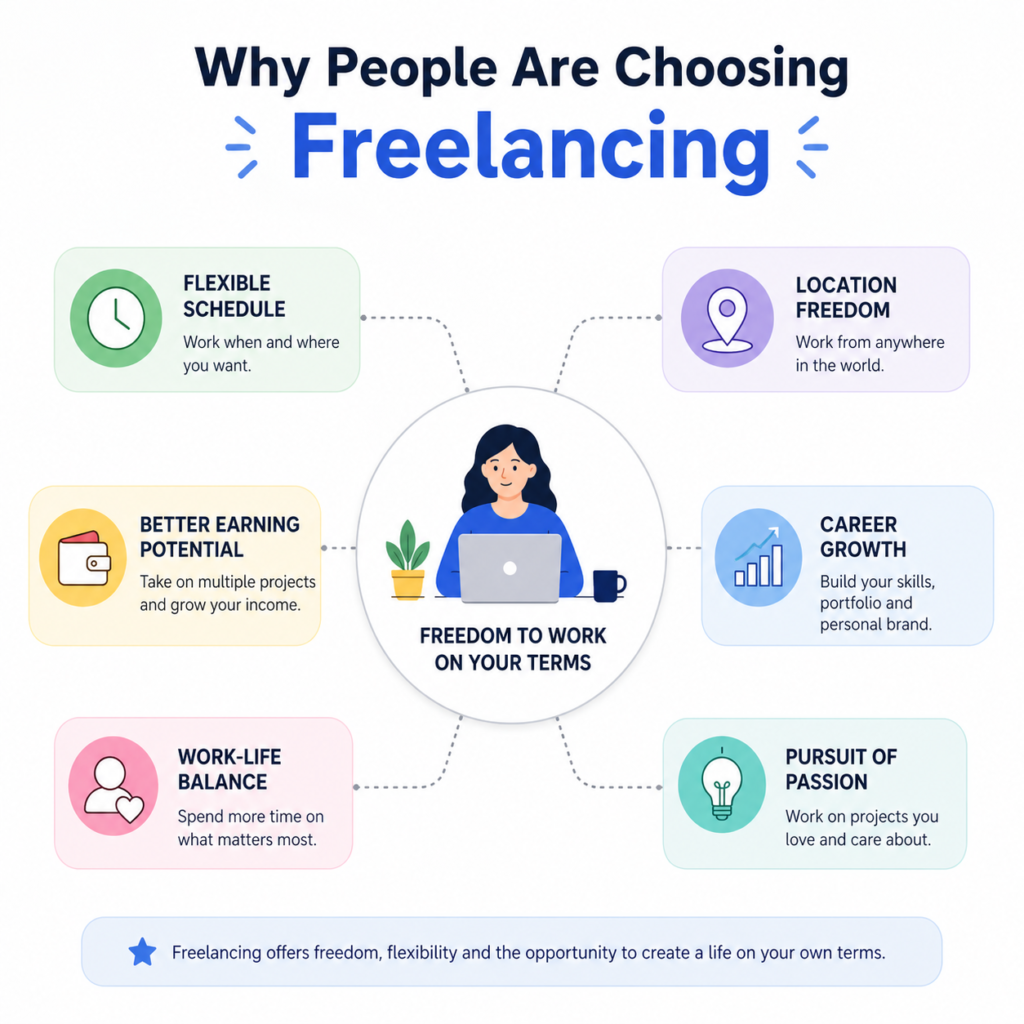
There are several reasons freelancing in 2026 continues to attract professionals across industries.
1. Income Diversification
Relying on one salary feels risky.
Freelancing allows people to create multiple income sources through retainers, one-time projects, consulting, and digital products. This reduces dependency on a single employer.
For many professionals, freelancing starts as protection before it becomes freedom.
2. Remote Work Changed Expectations
People now know work can happen from anywhere.
The traditional office path no longer feels like the only option. Freelancing gives professionals the ability to work across countries, currencies, and industries without relocating.
This is especially powerful for freelancers in places like South Africa, where global clients can create stronger earning potential.
3. Businesses Prefer Flexible Talent
Hiring full-time staff is expensive.
Businesses increasingly prefer freelancers for specialized work like SEO, paid ads, design, automation, copywriting, development, and operations support.
They get expertise without long-term overhead.
This trend keeps pushing demand upward.
4. Creator Economy Expansion
Many freelancers are no longer just service providers.
They are building personal brands, newsletters, templates, consulting offers, and education products.
Freelancing becomes the foundation for something bigger.
This hybrid model is one of the strongest opportunities in freelancing in 2026.
How Most People Actually Get Started
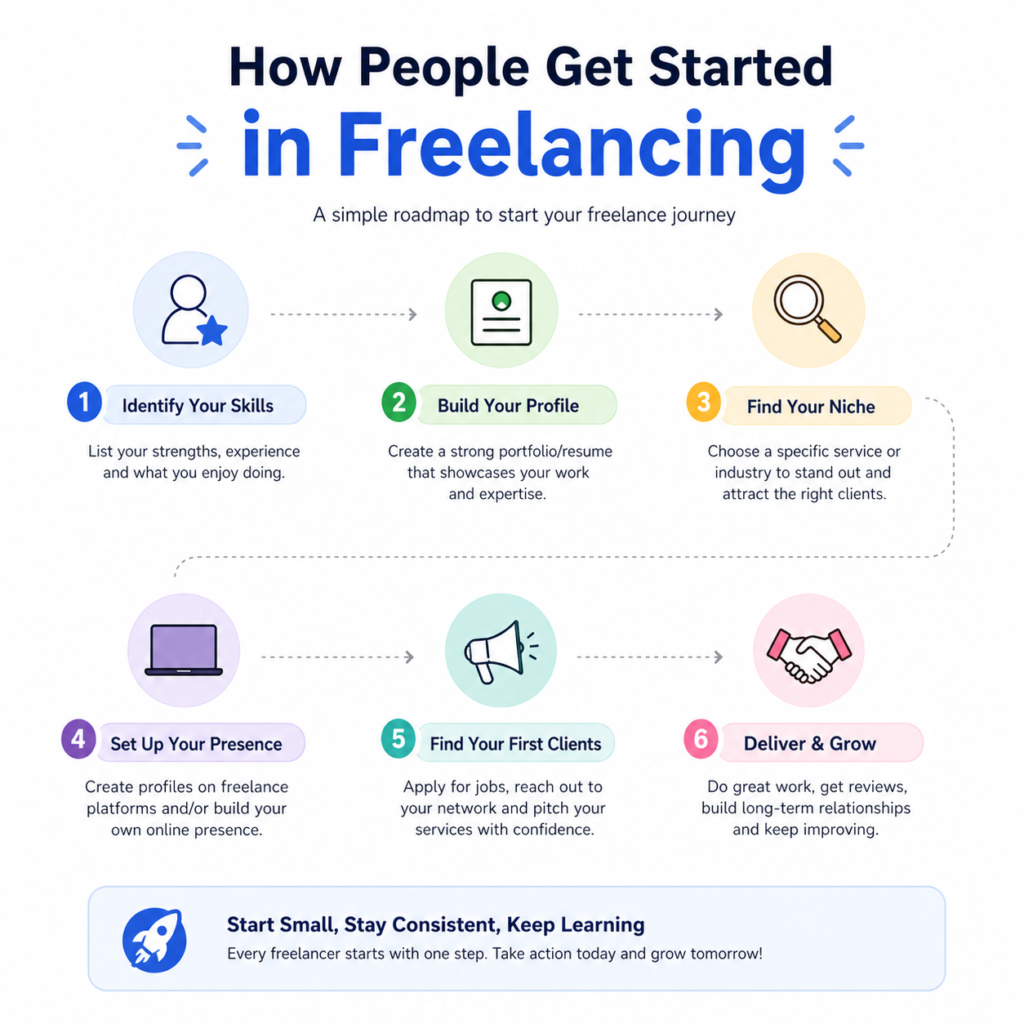
Most freelancers do not start by quitting their jobs.
They start by solving one problem for one person.
That’s it.
The idea of needing a perfect website, logo, or massive audience before starting is one of the biggest delays people create for themselves.
Most successful freelancers begin much simpler.
Step 1: Identify a Sellable Skill
You do not need a “freelance skill.”
You need a useful skill.
Ask:
- What do people already ask me for help with?
- What have I done professionally?
- What process do I understand better than most people?
- What result can I help someone achieve?
This could be:
- Website design
- Paid advertising
- Copywriting
- Video editing
- Social media management
- Sales systems
- SEO
- Email marketing
- CRM setup
- Automation
- Admin support
- Research
- Lead generation
Freelancing in 2026 rewards applied knowledge more than certifications.
Real outcomes matter more than theory.
Step 2: Package the Skill Clearly
Clients do not buy confusion.
Instead of offering endless custom work, create clear offers.
For example:
Bad:
“I do social media”
Better:
“I create 12 high-converting Instagram posts per month for local businesses”
Bad:
“I help with websites”
Better:
“I build service business websites designed to generate quote requests”
Specific offers convert faster.
This is one of the biggest differences between struggling freelancers and booked freelancers.
Step 3: Get Proof Before Chasing Scale
Many new freelancers focus too early on scaling.
First, get proof.
Proof means:
- Testimonials
- Case studies
- Before-and-after examples
- Results screenshots
- Portfolio samples
Sometimes this means doing a smaller project first, helping someone in your network, or creating sample work proactively.
Clients trust evidence more than promises.
Step 4: Choose Your Client Acquisition Method
Most freelancers begin through one of these channels:
Freelance Platforms
Platforms like Upwork and Fiverr create access to buyers immediately.
The downside is competition.
The upside is speed.
For beginners, platforms can be excellent for learning how buyers think.
Direct Outreach
This means contacting businesses directly through email, LinkedIn, or social media.
This works well when your service solves an obvious problem.
For example:
“I noticed your website loads slowly and your booking form is broken. I can help fix that.”
Good outreach is specific, not spam.
Content Marketing
Posting valuable content builds trust.
This includes:
- LinkedIn posts
- X (Twitter)
- Blog content
- YouTube
- Short-form video
- Newsletter content
This is slower but stronger long term.
Many freelancers eventually move here because it compounds.
At Flows4, this is a major focus—using content as a growth system instead of depending only on platforms.
The Best Freelance Services in 2026
Some services continue to perform exceptionally well because they connect directly to business growth.
Strong demand usually exists where money moves.
Top examples include:
Revenue-Focused Services
- Paid ads
- Sales funnels
- Conversion optimization
- Email marketing
- Lead generation
- SEO
Businesses understand ROI here.
These services are easier to justify financially.
Operational Services
- Automation setup
- CRM management
- Virtual assistance
- Workflow systems
- Customer support operations
As businesses scale, efficiency becomes valuable.
Creative Services
- Design
- Video editing
- Branding
- Content production
- Website development
These remain strong when positioned around business outcomes.
Not “pretty design.”
Better performance.
The Biggest Mistakes New Freelancers Make
Freelancing in 2026 is still full of opportunity, but beginners often slow themselves down with avoidable mistakes.
Trying to Serve Everyone
Generalists struggle to explain value.
Specificity wins.
Choose a problem, not just a skill.
Waiting Too Long to Start
Perfection kills momentum.
You do not need a perfect portfolio.
You need conversations.
Underpricing Everything
Cheap pricing attracts difficult clients.
Price should reflect outcomes, not insecurity.
Confidence grows through delivery, not discounts.
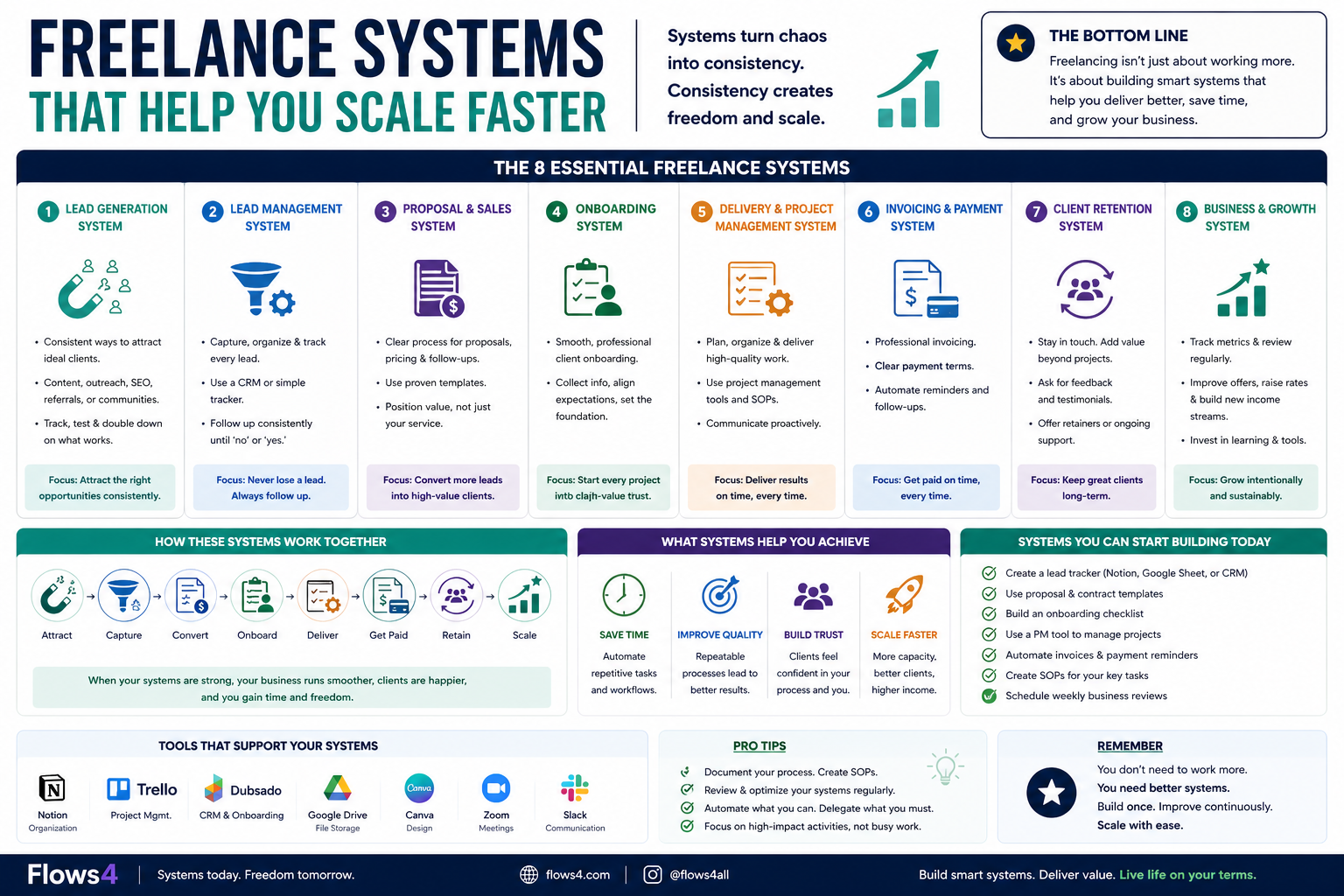
Ignoring Systems
Freelancers who survive long term build systems.
This includes:
- Lead tracking
- Proposal templates
- Contracts
- Follow-up processes
- Content workflows
- Client onboarding
Without systems, freelancing becomes chaos.
This is why many freelancers eventually use templates, SOPs, and operational resources from platforms like Flows4.com.
Can Freelancing Become a Full-Time Business?
Absolutely.
But the goal should not be “escaping a job.”
The goal should be building a reliable business.
That means:
- Consistent lead flow
- Repeatable delivery
- Clear positioning
- Better pricing
- Strong retention
- Scalable systems
Some freelancers stay solo.
Others build agencies.
Others turn expertise into courses, templates, consulting, and digital products.
Freelancing is often the first layer—not the final destination.
The smartest freelancers think beyond client work.
They use services to fund assets.
That shift changes everything.
Final Thoughts on Freelancing in 2026
Freelancing in 2026 is still one of the best ways to create income, freedom, and career control—but only if you approach it strategically.
The opportunity is real.
The easy-money fantasy is not.
Freelancers who win today are the ones who solve real problems, communicate clearly, build trust fast, and create systems that support growth.
You do not need permission.
You need a useful skill, a clear offer, and the willingness to start before you feel fully ready.
That is how most people begin.
And that is still how it works.
Ready to Build Your Freelance System?
If you’re serious about freelancing in 2026, stop thinking only about getting clients and start building the systems behind sustainable growth.
Visit Flows4 for practical templates, digital products, and resources designed to help freelancers turn skills into income—and income into real business.
Start with one offer.
Build one proof point.
Then keep going.
That’s how freelance success compounds.