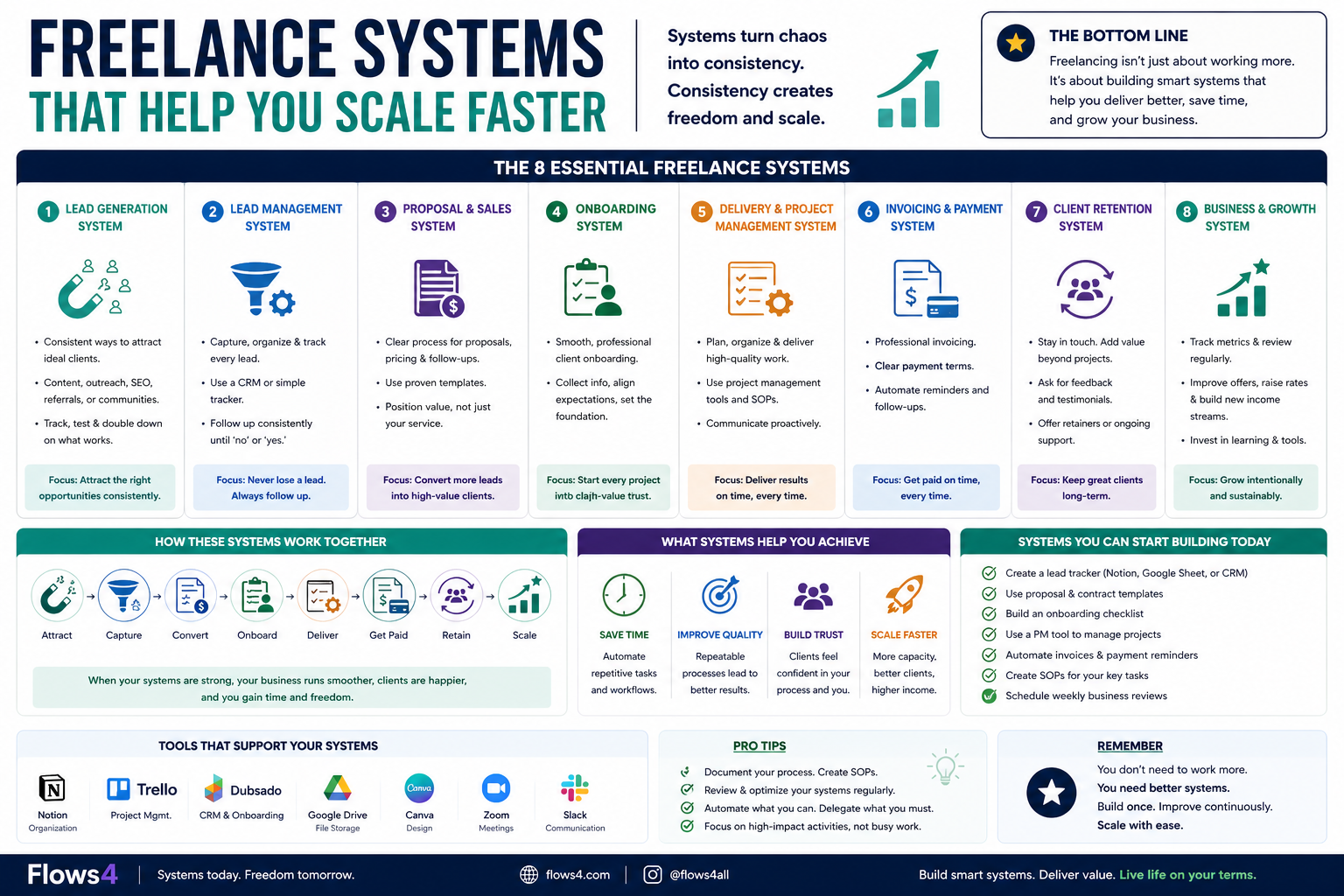
Most freelancers start by selling time.
You offer a service, complete the work, send the invoice, and repeat. It works—but it also creates a ceiling. Your income depends on your available hours.
That’s why more people are exploring digital products for freelancers as a second income stream.
Instead of only selling your time, you start selling assets. Templates, guides, systems, toolkits, and resources that solve problems for your audience—without needing your constant involvement.
This is one of the smartest ways to create passive income for freelancers, especially in 2026 where creators, consultants, designers, marketers, and service providers are all looking for scalable income.
If you already freelance, you likely have valuable knowledge people would pay for. The goal is not to start from scratch—it’s to package what you already know.
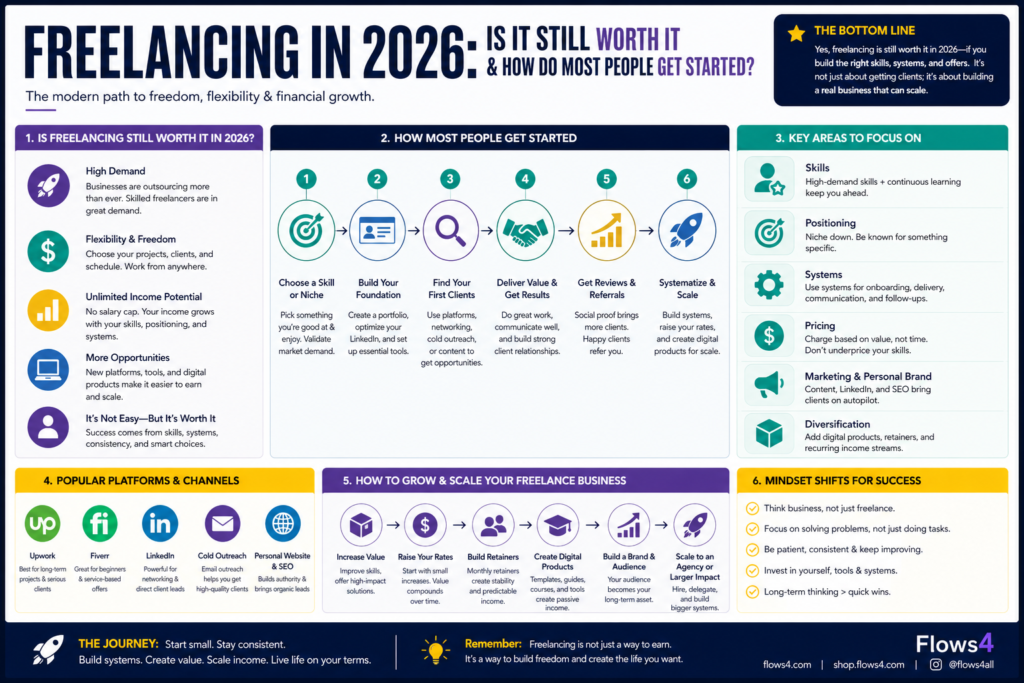
If you’re still building your freelance foundation, start with our guide on freelancing in 2026 to understand where the market is heading.
Let’s break down 10 practical freelance digital products you can create from your existing skills.

Why Digital Products Make Sense for Freelancers
Freelancing gives you income.
Digital products give you leverage.
Instead of repeating the same explanations, onboarding steps, client documents, or strategic advice, you can turn those into products freelancers can sell repeatedly.
This creates:
- More predictable revenue
- Less dependence on client work
- Better positioning as an expert
- Stronger personal brand authority
- Additional lead generation for high-ticket services
Many freelancers accidentally create digital products already—they just never package them properly.
That proposal template you use?
That onboarding checklist?
That client questionnaire?
That strategy framework?
Those are all potential digital products for freelancers.
The key is learning how to turn internal systems into sellable assets.
At Flows4, this is exactly the focus: helping freelancers turn skills into systems and systems into scalable income.
You can also explore ready-made resources at Flows4 Shop.
1. Client Proposal Templates
If you send proposals regularly, you already have a product.
Freelancers in design, marketing, consulting, coaching, and development can package proposal templates for others in the same industry.
People pay for clarity.
A strong proposal template helps them close faster and look more professional.
This is one of the easiest products freelancers can sell because it already exists inside your workflow.
2. Service Contracts and Agreement Templates
Contracts are always needed and always confusing.
If you’ve worked with lawyers or refined your own process, your service agreement structure can become a valuable digital product.
You are not selling legal advice—you are selling workflow efficiency and professional structure.
Freelancers want confidence, and templates help reduce friction.
3. Client Onboarding Systems
Every freelancer eventually builds an onboarding process.
Welcome emails, intake forms, questionnaires, kickoff checklists, project timelines—these are highly valuable assets.
Packaging these into an onboarding kit creates one of the most useful freelance digital products available.
People buy speed.
They want a shortcut to professionalism.
4. Social Media Content Calendars
If you’re a marketer, content creator, or social media freelancer, this one is obvious.
Content planners, campaign calendars, caption banks, posting systems, and engagement trackers are incredibly popular.
Businesses want structure.
Freelancers want systems.
This is one of the strongest freelance income streams because the demand is constant.
You can learn more practical creator systems and workflows on Flows4.
5. Canva Templates
Design freelancers have a huge opportunity here.
Instagram carousels, lead magnets, eBooks, proposal decks, media kits, business cards, presentation decks—these all sell well.
Businesses love editable templates because they save both money and time.
Canva products are especially strong because they are easy to deliver and easy for customers to use.
This makes them ideal digital products for freelancers.
6. Industry-Specific Checklists
Checklists sell because they reduce mistakes.
Wedding photographers, fitness coaches, consultants, virtual assistants, and business owners all want process clarity.
Examples include:
- Website launch checklist
- Client onboarding checklist
- Email campaign checklist
- Sales call preparation checklist
- Product launch checklist
Simple products often outperform complicated ones.
People want outcomes, not complexity.
7. Swipe Files and Prompt Packs
Writers, marketers, and sales professionals can monetize swipe files.
Email templates, ad copy frameworks, cold outreach scripts, sales scripts, and prompt packs are all strong performers.
Especially with AI adoption growing, prompt packs have become one of the fastest-growing digital products for freelancers.
People do not just buy prompts.
They buy decision speed.
8. Mini Courses and Workshops
Not every course needs to be a massive academy.
Sometimes a focused 60-minute workshop solves the exact problem someone has.
Freelancers can create mini-courses around:
- Landing your first client
- Setting freelance pricing
- Building a personal brand
- Creating your first lead magnet
- Launching your first digital product
Education creates authority and trust.
It also supports long-term passive income for freelancers.
9. Notion Dashboards and Productivity Systems
Productivity sells because chaos is expensive.
Freelancers who build strong internal systems can package them as Notion dashboards.
Examples include:
- Client management systems
- Content planning dashboards
- Freelance finance trackers
- Project delivery systems
- Goal tracking systems
This works especially well if your audience struggles with consistency and organisation.
10. Business-in-a-Box Bundles
Bundles are where real value stacking happens.
Instead of selling one template, combine multiple assets into one complete solution.
For example:
A wedding photographer business kit could include:
- Proposal templates
- Contracts
- Client onboarding
- Social media planner
- Pricing guide
- Client questionnaire
This creates stronger perceived value and higher average order value.
It also becomes one of the best ways to truly monetize freelance skills.
You can see examples of this model inside the Flows4 Shop ecosystem.
How to Choose the Right Product First
Do not ask:
“What should I create?”
Ask:
“What do people keep asking me for?”
The best digital products come from repeated problems.
Look for:
- Questions clients ask often
- Processes you repeat weekly
- Templates you already use
- Advice you constantly explain
- Frameworks that save time
Your first product should be simple.
Do not build the empire first.
Build the first sale first.
That creates proof.
Then you scale.
Final Thoughts
The best digital products for freelancers are not invented—they are extracted.
You already have expertise.
You already have systems.
You already have valuable shortcuts.
The opportunity is simply packaging them properly.
Freelancing gives you freedom.
Digital products give you scalability.
Together, they create real business ownership.
If you’re serious about building smarter freelance income, start small, start practical, and start with what already works.
Visit Flows4 for more creator systems, freelancing resources, and practical strategies to help you build income beyond client work.
Because the goal is not just freelancing.
The goal is leverage.