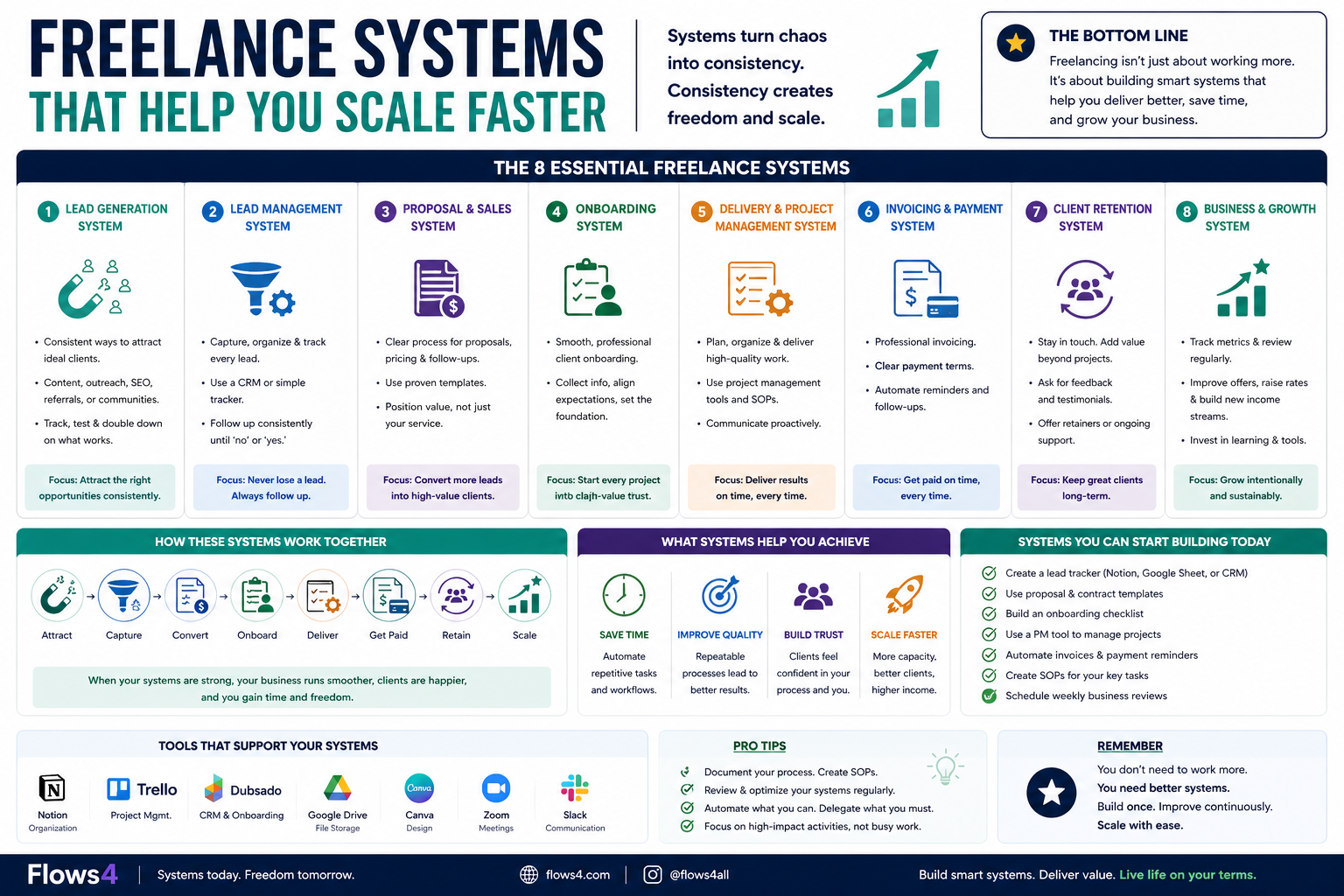
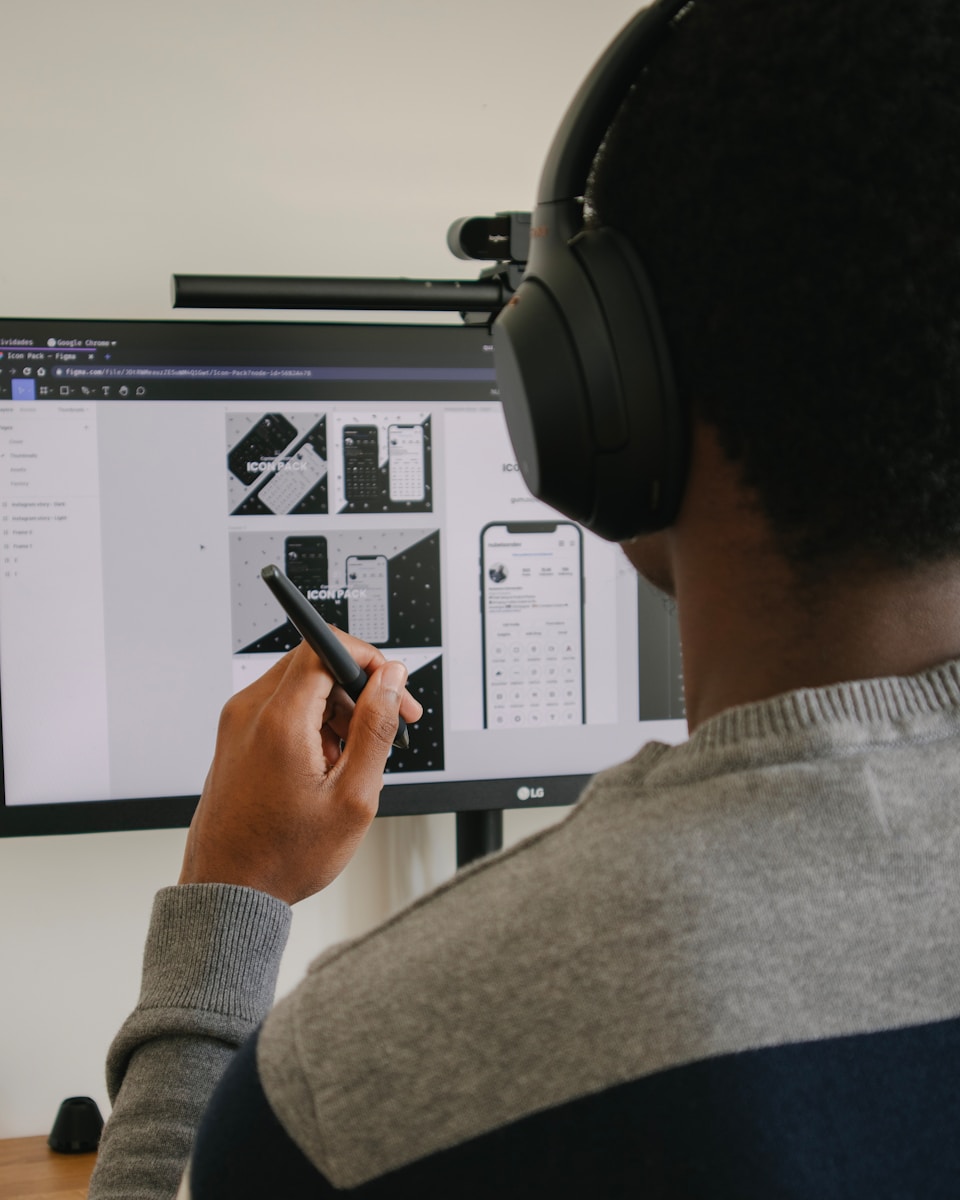
Why so many people are choosing to work for themselves
Not long ago, starting a business felt like a massive leap. You needed capital, connections, and a high tolerance for risk. Today, the landscape looks very different.
Thanks to faster tools, global platforms, and AI-powered assistance, more people are quietly building income streams alongside their day jobs. Some call it freelancing. Others call it solopreneurship. At its core, it’s simply about using your skills to create value — without needing a big team or a complicated setup.
Freelancing usually means offering a specific service (like design, writing, marketing, or development) to clients.
Solopreneurship goes a step further: you’re still solo, but you’re building systems, products, or recurring income around your skills.
If you’ve ever wondered whether there’s a smarter, more flexible way to earn — especially in the age of AI — this guide is for you. We’ll explore solopreneurship and how to freelance in a way that’s realistic, grounded, and achievable for beginners.

What Solopreneurship Really Means (And What It Doesn’t)
Solopreneurship isn’t about hustling 24/7 or building the next tech unicorn. It’s about leverage.
A solopreneur is someone who works independently, relying on smart tools and simple systems rather than employees, and builds income around their skills, knowledge, or digital assets. Instead of scaling through people, they scale through leverage — using technology, platforms, and repeatable processes to do meaningful work on their own terms.
This could look like:
- A freelancer who packages their services into clear offers
- A consultant who sells advice and frameworks
- A creator who turns expertise into templates, courses, or guides
What solopreneurship is not:
- You don’t need to quit your job immediately
- You don’t need to be “an entrepreneur type”
- You don’t need a complex business plan
In the age of AI, solopreneurship has become more accessible because:
- AI tools reduce time spent on admin, research, and content
- You can test ideas quickly and cheaply
- One person can now do what once required a small team
This is why solopreneurship and how to freelance are being searched more than ever — people want autonomy, but without chaos.
Why AI and Fast Tools Have Changed the Game
A decade ago, freelancing meant doing everything manually. Today, AI acts like a silent assistant in the background.
For beginners, this is powerful.
AI can help you:
- Draft emails, proposals, and social posts
- Brainstorm ideas and refine messaging
- Speed up research and learning curves
- Create basic designs, outlines, and workflows
This doesn’t replace your skills — it amplifies them.
For example:
- A freelance writer can produce better drafts faster
- A marketer can test more ideas in less time
- A consultant can document their thinking into reusable assets
The real advantage isn’t speed alone. It’s confidence.
When the technical barriers drop, more people feel capable of starting. You don’t need to know everything — you just need to know your next step.
This is why solopreneurship today often starts small:
- One skill
- One service
- One problem you can help solve
AI helps you move faster, but clarity is still your most valuable asset.
How to Freelance: A Simple, Beginner-Friendly Framework
If you’re new, freelancing is often the easiest entry point into solopreneurship. Here’s a practical way to think about how to freelance without overwhelm.
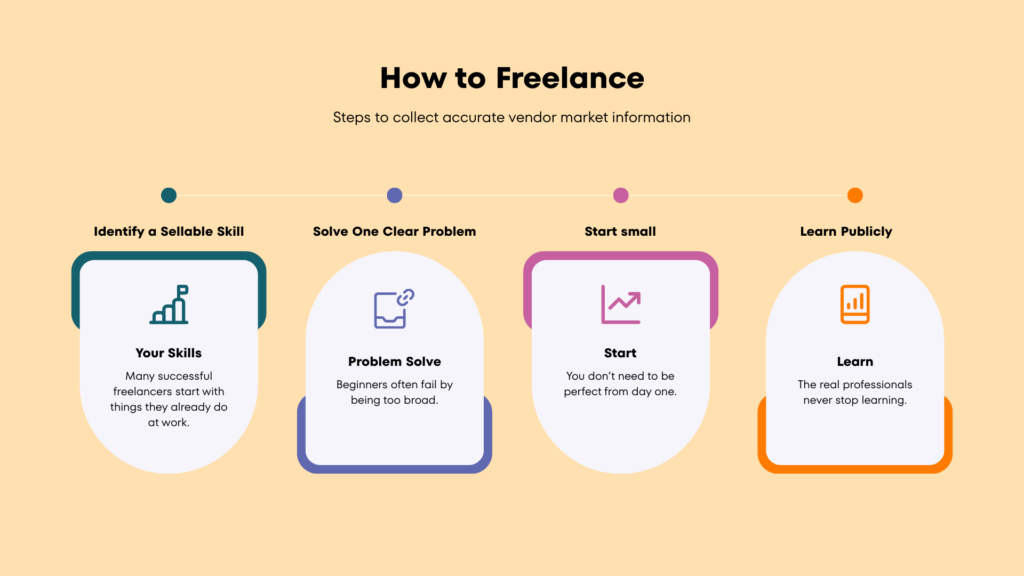
Step 1: Identify a Sellable Skill
You don’t need a rare or flashy skill. Many successful freelancers start with things they already do at work.
Examples include:
- Writing or editing
- Designing slides or visuals
- Managing social media
- Building websites
- Organising data or processes
Ask yourself:
- What do people already ask me for help with?
- What tasks do I do comfortably that others avoid?
Step 2: Solve One Clear Problem
Beginners often fail by being too broad.
Instead of:
“I offer marketing services”
Try:
“I help small businesses set up simple email newsletters”
Clarity builds trust — especially when you’re new.
Step 3: Start Small and Learn Publicly
You don’t need a perfect website on day one.
You can start with:
- A simple profile on a freelance platform
- A one-page site
- Even a clear LinkedIn bio
Your first goal isn’t perfection — it’s feedback.
Freelancing teaches you:
- What people will actually pay for
- How to communicate value
- How to improve your offer over time
This is where solopreneurship begins to take shape naturally.
The Real Benefits of Solopreneurship (Beyond Money)
Money matters — but it’s rarely the only reason people choose this path.
Here are some deeper benefits of solopreneurship and how to freelance on your own terms.
1. Control Over Your Time
You decide:
- When you work
- How much you take on
- Which clients you accept
Even side income can reduce financial pressure.
2. Skill Compounding
Every project makes you better.
Over time, you can:
- Charge more
- Work less
- Productise what you’ve learned
This is how freelancers evolve into solopreneurs.
3. Optionality
You’re no longer dependent on a single income source.
That optionality brings:
- Confidence
- Negotiating power
- Long-term resilience
In a fast-changing economy, flexibility is security.
Your Next Step Doesn’t Have to Be Big
Solopreneurship isn’t about having everything figured out. It’s about starting where you are, with what you know, and improving as you go.
In the age of AI and fast businesses:
- One person can build meaningful income
- Freelancing can evolve into scalable systems
- Small, focused efforts can compound over time
If you’re curious about solopreneurship and how to freelance, your next step could be as simple as:
- Listing your skills
- Helping one person solve one problem
- Learning in public as you go
You don’t need permission to begin. You just need momentum.
And momentum starts with a single, intentional step.